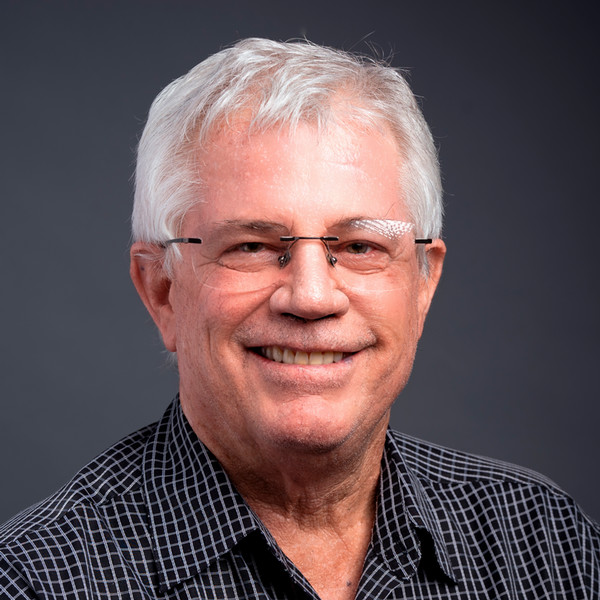
El Paso–Las Cruces–Ciudad Juárez Borderlands and beyond — GRM provides independent appraisal review, risk management consulting, dispute analysis, and litigation support for financial institutions, government agencies, and institutional clients from coast to coast and border to border. Managing the risk in real property.
Professional Designations & Memberships
What We Do
GRM brings institutional-grade rigor and 45+ years of active practice to appraisal, consulting, litigation, and education engagements — from single parcels to multi-state portfolios, and from the classroom to the courtroom.
Independent Standards 3 and 4 review reports testing appraisals for credibility, USPAP compliance, and FIRREA/OCC regulatory conformance. Desk, field, and technical reviews across all asset classes.
Expert witness services for attorneys, courts, and arbitration panels. Affirmative opinions, rebuttal valuations, deposition and trial testimony in eminent domain, contamination, bankruptcy, and contract disputes.
USPAP-compliant market value opinions for acquisition financing, collateral, condemnation, estate tax, ground lease reset, and investment decisions — spanning commercial, industrial, multifamily, land, and special-use properties.
Policy, procedure, and governance consulting for financial institution appraisal programs — FIRREA/OCC regulatory compliance, appraiser panel management, engagement letter standards, and pre-audit readiness reviews.
Steven Gragg brings 45+ years of active practice and a career spanning banking, brokerage, development, litigation, and academia to the podium, the classroom, and the boardroom. As an Assistant Professor of Practice at UTEP's Woody L. Hunt College of Business and a globally recognized practitioner, he delivers presentations, seminars, and training programs that translate complex real estate concepts into actionable knowledge — for students, industry professionals, attorneys, lenders, and government agencies.
The Backstory
Every credential, designation, and opinion GRM delivers today is rooted in a lived understanding of real property that began not in a classroom — but in the red soil of eastern New Mexico, the aisles of a hardware store, and a maintenance closet in an Austin apartment complex.
Wilbur T. Gragg was born April 3, 1919 in Nara Visa, New Mexico — a small ranching community on the high plains of eastern NM near the Texas border. Montell Rogers was born February 22, 1925. They grew up in the Great Depression, survived the Dust Bowl drought that devastated the Southern Plains, and came of age during World War II. Their college educations at Eastern New Mexico University (ENMU) in Portales were interrupted by the war. They were, as that generation was, profoundly shaped by scarcity — frugal, self-reliant, and deeply skeptical of easy credit.
When Wilbur was a boy, his father and his uncle owned a bank in Nara Visa. When the Depression hit, they were owed money by nearly every neighbor in the county. His father recalls the family discussion about where to drive in their Model T to collect on the debts.
"Well, we can head any direction and people will owe us money — and they won't have any money to pay us."
The bank closed. The brothers lost their money. They hunkered down on their ranches and weathered the storm the only way people on the land could — by working it, enduring it, and waiting.
Both sides of Steven Gragg's family settled New Mexico before it became a territory — ranchers and farmers who understood land not as an investment category but as the foundation of generational wealth. Growing up in Clovis, NM (born 1958), he spent summers working on family ranches across eastern New Mexico and the Texas Panhandle — learning by osmosis the connection between land, weather cycles, commodity prices, and the long patience required to build lasting value through real property.
His father served in the Army Air Corps in WWII, then went to work at Portales Hardware with his oldest brother before becoming a wholesale hardware salesman. Three uncles owned hardware, lumber, and implement stores serving small towns and surrounding farms across New Mexico. A fourth uncle worked in banking and consumer finance. Every summer, young Steven traveled with his father calling on retail hardware customers, and worked in his uncles' stores — learning the economics of land, implement, seed, and credit from the inside.
The family moved to El Paso in 1973 — the same Borderlands city where Gragg would return decades later to found GRM and teach at UTEP. After graduating from Burges High School in 1976, he moved to Austin to attend The University of Texas — and immediately found a way to pay for it that would define his entire career.
To pay for school, Gragg took a job as a maintenance man at the apartment complex where he lived. It was there — not in a classroom — that he learned leasing, property management, and investment real estate from the ground up. Literally. Fixing what was broken, watching what tenants valued, understanding why owners made the decisions they made.
That hands-on apprenticeship led him to study Finance and Real Estate at the McCombs School of Business. Before graduation, he moved from maintenance into a position as a "runner" for the partners of McLester & Grisham Realtors — the largest residential real estate brokerage firm in Austin, with five offices. He ran from office to office delivering paperwork, running errands, and working on special research projects for the partners. He was learning the business from every angle.
As he was finishing his degree, Gragg took a real estate valuation course from an adjunct professor who held the MAI designation. It was the course that crystallized everything — the land, the economics, the rigor, the discipline. He left knowing exactly what he wanted to do: become a real estate appraiser and earn the MAI.
Six months before graduating UT Austin in 1980, he was hired as a staff appraiser at Franklin Savings & Loan. Within two years he was Chief Appraiser and sat on the loan committee. He was also the "Facilities Officer" — responsible for maintenance and repairs of the headquarters and multiple branches. He worked with the President and CFO on building new branches and the restoration of a historic building on Congress Avenue into a new headquarters.
That historic building on Congress Avenue was the Walter Tipps Hardware Store — a landmark of Austin commercial history. The hardware man's son, now a Chief Appraiser, helped restore a hardware store into a bank headquarters. The circle was complete. The land, the hardware, the building — everything his family had taught him — now in a single assignment.
During his years at Burges High School (1974–76), Steven Gragg's first real job was at the Safeway grocery store at 5514 Alameda Ave, El Paso 79905 — the Fox Plaza area at the intersection of E. Paisano Drive and Alameda Avenue, in the heart of a working-class Eastside neighborhood. He started as a courtesy clerk — bagging groceries, carrying them to customers' cars, rounding up carts, mopping and sweeping floors — and worked his way up to checker, ringing up groceries by hand in the days before scanning.
He was the only güero on the crew. Spanish was the primary language. Fortunately, he'd been studying Spanish since fifth grade, and he genuinely loved the culture of the neighborhood — the families, the rhythms, the sense of place that defines the Alameda corridor. That corner of El Paso wasn't just a job. It was an education in community.
In 2023, a Realtor asked Gragg to help determine the highest and best use and asking price for 145 S. Clark Street — just 0.07 miles from that Safeway, a four-minute walk. By 2026, that site became the planned location for La Semilla ("The Seed") — a proposed 40-unit infill multifamily development targeting the TTUHSC medical workforce market.
The vision: plant a seed in this neighborhood to encourage the redevelopment of the Alameda corridor — the same streets where a teenage Steven Gragg was bagging groceries and learning to say "¿Necesita ayuda con sus bolsas?" fifty years earlier. The kid who mopped the floors at the Safeway on Alameda is now proposing the development that could anchor its revitalization. The Safeway is now a Food King. The corner hasn't changed much — but it's about to.
From the ranches of eastern New Mexico to the loan committee of Franklin Savings — from the aisles of Portales Hardware to the largest verdict in Arizona eminent domain history — from an apartment maintenance closet to the faculty of a Tier 1 research university: every chapter of this career connects back to one fundamental conviction learned on the land before any classroom confirmed it.
About GRM
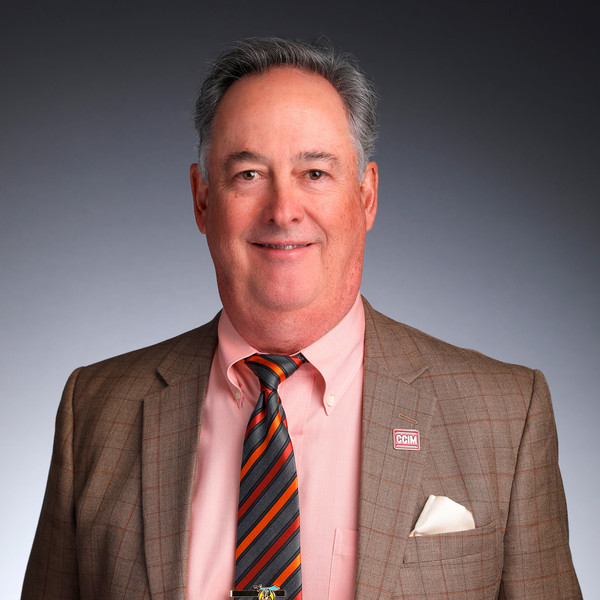
Steven R. Gragg brings over 45 years of diverse real estate experience spanning appraisal, banking, brokerage, development, and litigation support. He is the sole member of Gragg Risk Management LLC, an El Paso-based practice serving clients from coast to coast and border to border.
A native El Pasoan and graduate of Burges High School, Mr. Gragg earned his BBA with a Major in Real Estate from the University of Texas at Austin, College of Business Administration (McCombs) in 1980 — and his MBA from Arizona State University's W. P. Carey School of Business in 1998. He has held senior positions at PricewaterhouseCoopers LLP, Cushman & Wakefield, and MUFG Union Bank, where he served as Director and Chief Appraiser before founding GRM in 2018.
He is certified as a general real estate appraiser in seven states — Arizona, California, Colorado, Nevada, New Mexico, Texas, and Utah. He holds seven professional designations including the MAI, AI-GRS, SRA, FRICS, R/W-AC, CCIM, and FLAI. He served as International President of Lambda Alpha International (2014–2016) and is currently President-Elect of the Greater El Paso CCIM Chapter and an Assistant Professor of Practice at UTEP's Woody L. Hunt College of Business.
In 2026, Mr. Gragg was honored with the Woody L. Hunt College of Business Faculty Service Award for exceptional commitment and contributions to the college.
Areas of Expertise
GRM has handled virtually every major asset class and market, from the El Paso–Las Cruces–Ciudad Juárez Borderlands to national institutional portfolios.
Litigation Support
GRM maintains a specialized practice in real estate dispute analysis and litigation support, serving attorneys, courts, and arbitration panels on complex valuation matters throughout the United States and internationally.
Mr. Gragg has prepared and delivered expert testimony in federal and state courts, bankruptcy courts, Special Commissioners' hearings, mediation, and arbitration — across a wide range of contested real estate issues including eminent domain, contamination, bankruptcy, property rights, contract disputes, and USPAP standard-of-care matters.
Teaching & Academic Leadership
45+ years of active practice in real estate valuation, development, and litigation support — brought directly into the classroom. Professor Gragg bridges the gap between academic theory and real-world market practice, teaching commercial real estate, investment analysis, and entrepreneurship in finance.
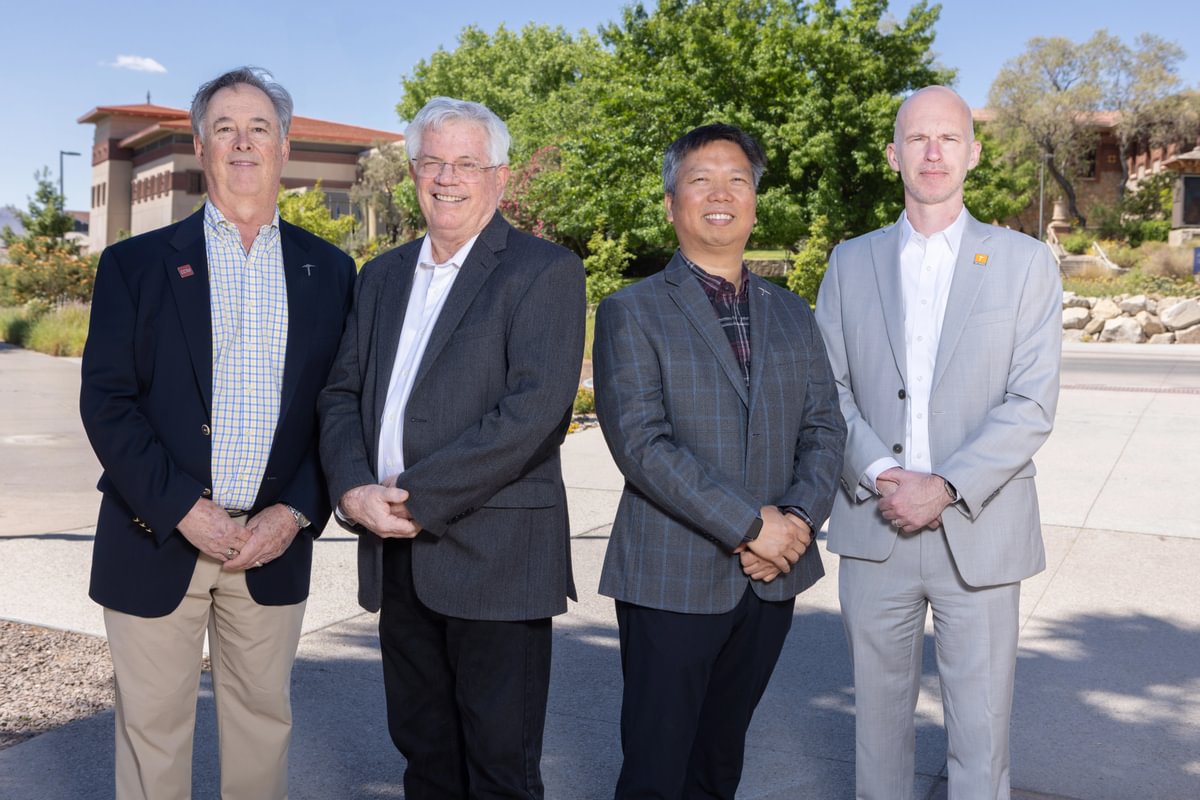
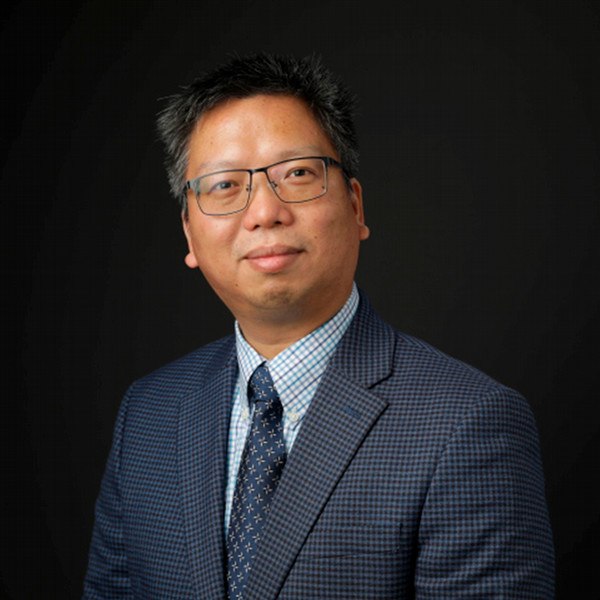
One of the world's foremost real estate researchers, Dr. Feng is ranked #3 globally among real estate scholars by the Journal of Real Estate Literature (JREL) REAL rankings (2020–2024) — the highest-ranked researcher in Texas and the only Texas university in the top 15. UTEP's Department of Economics & Finance ranks in the top 10 worldwide.
Published Works — Steven R. Gragg
Education
Steven Gragg served the full four-year LDAC leadership arc — Member → Discussion Leader → Chair — one of a select few honored to serve all four years and lead the council. LDAC convenes annually in Washington, D.C. to formulate solutions to challenges facing the appraisal profession and to establish an appraiser presence before Congress.
The LDAC traces its lineage to the Society of Real Estate Appraisers (SREA) Young Advisory Council (YAC), founded 1969. Gragg served as the final Chair of the SREA YAC at the exact moment the appraisal profession underwent its most consequential institutional transformation in history.
The merger of the SREA and the American Institute of Real Estate Appraisers (AIREA) — the two largest U.S. appraisal organizations, both founded in the 1930s — failed on a first vote in February 1990 by a margin of just 38 ballots out of 5,634 cast. The merger succeeded on the second attempt and the Appraisal Institute was formed January 1, 1991, creating the nation's largest professional appraisal organization with more than 35,000 members.
As SREA YAC Chair, Gragg lobbied for the continuation of the young appraiser leadership development program through the institutional transition — ensuring the YAC's 22-year legacy survived the merger and became the Appraisal Institute Leadership Development and Advisory Council (LDAC), which continues today as the profession's primary leadership pipeline and congressional advocacy forum.
Community Investment & Arts Support
Real estate is ultimately about place — the communities, cultures, and institutions that give land its meaning and its value. GRM's support of the arts and civic institutions in El Paso is inseparable from a 45-year commitment to this region. Land economists have long understood that great cities require great cultural infrastructure — from the Camino Real to the concert hall.
Tom Lea (1907–2001) was one of America's great artists — El Paso-born, a LIFE Magazine combat artist in WWII whose painting "The Two-Thousand Yard Stare" became one of the most powerful images of the war. His murals, novels, and paintings are woven into the cultural fabric of the Borderlands. The Pass of the North mural in the El Paso federal courthouse and his Rio Grande paintings speak directly to the land and history Steven Gragg has spent a career valuing.
The El Paso Symphony Orchestra has sustained the region's musical life for over 90 years — performing at the historic Plaza Theatre and Abraham Chavez Theatre in the heart of downtown El Paso. The EPSO is the cultural anchor of a downtown real estate district that GRM has long tracked as a bellwether of urban revitalization. Arts institutions of this caliber directly influence neighborhood values, attract talent, and signal a city's confidence in its own future.
El Paso Pro Musica brings world-class chamber music and ensemble performance to the Borderlands — championing young musicians, community outreach, and classical music education through its partnership with UTEP's Center for Arts Entrepreneurship. Artistic Director Zuill Bailey is one of the world's foremost cellists. The organization's Making Music Matter initiative extends musical education deep into underserved El Paso communities.
Civic Leadership & Public Service
Civic engagement is not ancillary to a real estate practice — it is essential to it. Understanding how communities function, how institutions maintain trust, and how public safety infrastructure shapes neighborhoods is foundational to credible real estate analysis. These appointments reflect the trust the City of El Paso places in GRM's principal as an independent, professional voice in the public interest.
Appointed as a public member of the EPPD Internal Affairs Discipline Review Board — an independent oversight role evaluating officer conduct, disciplinary actions, and institutional accountability. The board provides civilian perspective on complex internal affairs matters, balancing officer due process with community expectations of professional standards.
Member of the Westside Region Command Citizens Advisory Board — advising EPPD commanders on community issues, neighborhood concerns, and collaborative solutions at the local precinct level. The board serves as a structured bridge between law enforcement leadership and the communities they serve, translating resident concerns into actionable operational guidance.
Get In Touch
GRM provides independent appraisal review, risk management consulting, dispute analysis, and litigation support for financial institutions, government agencies, attorneys, courts, and institutional clients — from the El Paso–Las Cruces–Ciudad Juárez Borderlands to every major market coast to coast and border to border.
Real Estate Development Services & Feasibility Advisory
The Borderlands is the historically correct term — rooted in the Spanish colonial period, Juan de Oñate's 1598 crossing of the Rio Grande at El Paso del Norte, the 1,600-mile Camino Real de Tierra Adentro, and three centuries of Native American, Spanish, Mexican, and Anglo pioneer heritage. It is the term used by the National Park Service, academic institutions, and historians to describe this contested, culturally hybrid zone along the U.S.–Mexico frontier. "Borderplex" is a modern economic development coinage — useful for business recruitment branding, but invented by a marketing organization in 1999. GRM uses The Borderlands because the land deserves its full history.
GRM's development advisory practice applies the same analytical rigor used in institutional appraisal to feasibility analysis, site selection, pro forma modeling, and development decision-making — guided by the principles of responsible land use championed by Lambda Alpha International and the Urban Land Institute.
Steven Gragg brings over 45 years of real estate experience — as appraiser, Chief Appraiser, Managing Director, Director of Acquisitions, and active developer — to development consulting and principal investment. His work targets infill, adaptive reuse, workforce housing, and mixed-use projects that create genuine community value while meeting investor return thresholds.
GRM's CCIM-grounded development framework is structured around the Real Estate Development Matrix designed by Dr. Daniel Kohlhepp of Johns Hopkins, providing a rigorous seven-stage discipline from land banking through disposition.
CCIM Real Estate Development Matrix
Dr. Daniel Kohlhepp's framework — Johns Hopkins Carey Business School — structures the CCIM Development Specialty Track from passive land position through full asset disposition. GRM applies this discipline to every development advisory engagement.
View CCIM Development Specialty Track →Active Development Projects
GRM practices what it teaches — actively engaged as a principal and advisor on responsible infill development projects in the El Paso market that demonstrate the feasibility of doing good and doing well simultaneously.
UTEP Real Estate Minor Program
The UTEP Commercial Real Estate Minor was designed with substantial input from industry professionals — open to all business and non-business majors. Faculty are globally ranked top producers of real estate research, enhanced by senior practitioners from El Paso and beyond.
Graduates of the CRE Minor receive automatic credit for the first CCIM designation course — streamlining the path to the CCIM Designation in under six years. Plus CCIM Greater El Paso Chapter scholarships available annually (deadline: May 1).
Learn More →Nationally & internationally recognized faculty — globally ranked top producers of real estate research, enhanced by senior practitioners from El Paso and beyond.
Teaching real estate means getting off campus. UTEP students tour active developments, inspect comparable sales, and connect with industry professionals — all before graduation.
See more from the field — UTEP real estate students, Borderlands development projects, and land economics commentary.
Follow Steven Gragg on LinkedIn →45 Years · The Long View
Steven Gragg entered real estate in 1980 — at the peak of a historic inflation cycle — and has practiced through every major boom, recession, and recovery since. This perspective informs every appraisal, review, and expert opinion GRM delivers today.
Representative Clients
A selection of the financial institutions, law firms, government agencies, and institutional clients GRM has served — many on a repeat and ongoing basis.
What Clients Say
GRM's reputation is founded on credible, defensible opinions — and on being the expert who holds up under cross-examination.
I have known Steve Gragg for over 25 years. Having worked directly with Steve and followed his career, I have been impressed by his keen intellect, strong sense of purpose, his attention to people and detail, and his eagerness to become involved in challenging situations. Steve is disciplined, thoughtful, and relentless in solving complicated problems. Steve combines an understanding of the litigation process with valuation and damages theory and his wide-ranging experience in real estate valuation, appraisal review, and litigation consulting to make him one of a handful of the foremost real property experts on the national stage.
Steven's appraisal review work is thorough, well-documented, and stands up to scrutiny. He consistently identifies the issues that matter most to credit decision-makers — and he explains them clearly. He has been a trusted reviewer for our most complex commercial collateral for years.
We brought Steve in on a complex toxic tort matter with 23 residential properties. He developed a rigorous retrospective market rent methodology, survived a Daubert challenge without modification, and delivered compelling trial testimony. He is exactly the kind of expert you want on your side.
The ground lease rate analysis GRM prepared for El Paso International Airport was exactly what we needed — analytically sound, clearly presented, and defensible to our board and the public. Steven understood the public agency context and the constraints we operate under.
Steven Gragg is one of the most prepared expert witnesses I have worked with in eminent domain. He knows the law, he knows the methodology, and he communicates complex valuation concepts to a jury in plain English. The result in the Scottsdale condemnation case speaks for itself.
GRM helped us navigate FIRREA compliance and best practices for our appraisal program. Steven's institutional knowledge — from his years as Chief Appraiser at major banks — is invaluable. He knows exactly what regulators are looking for before the exam team walks in the door.
The Moore Ranch valuation was an extraordinarily complex assignment — 25,000 deeded acres, an estate tax purpose, and a charitable donation context. GRM delivered a credible, well-supported conclusion on time and withstood full scrutiny from tax counsel. We would not hesitate to engage GRM again.
* Testimonials reflect the nature of actual engagements. Client-identifying details are presented with permission or appropriately generalized to preserve confidentiality.